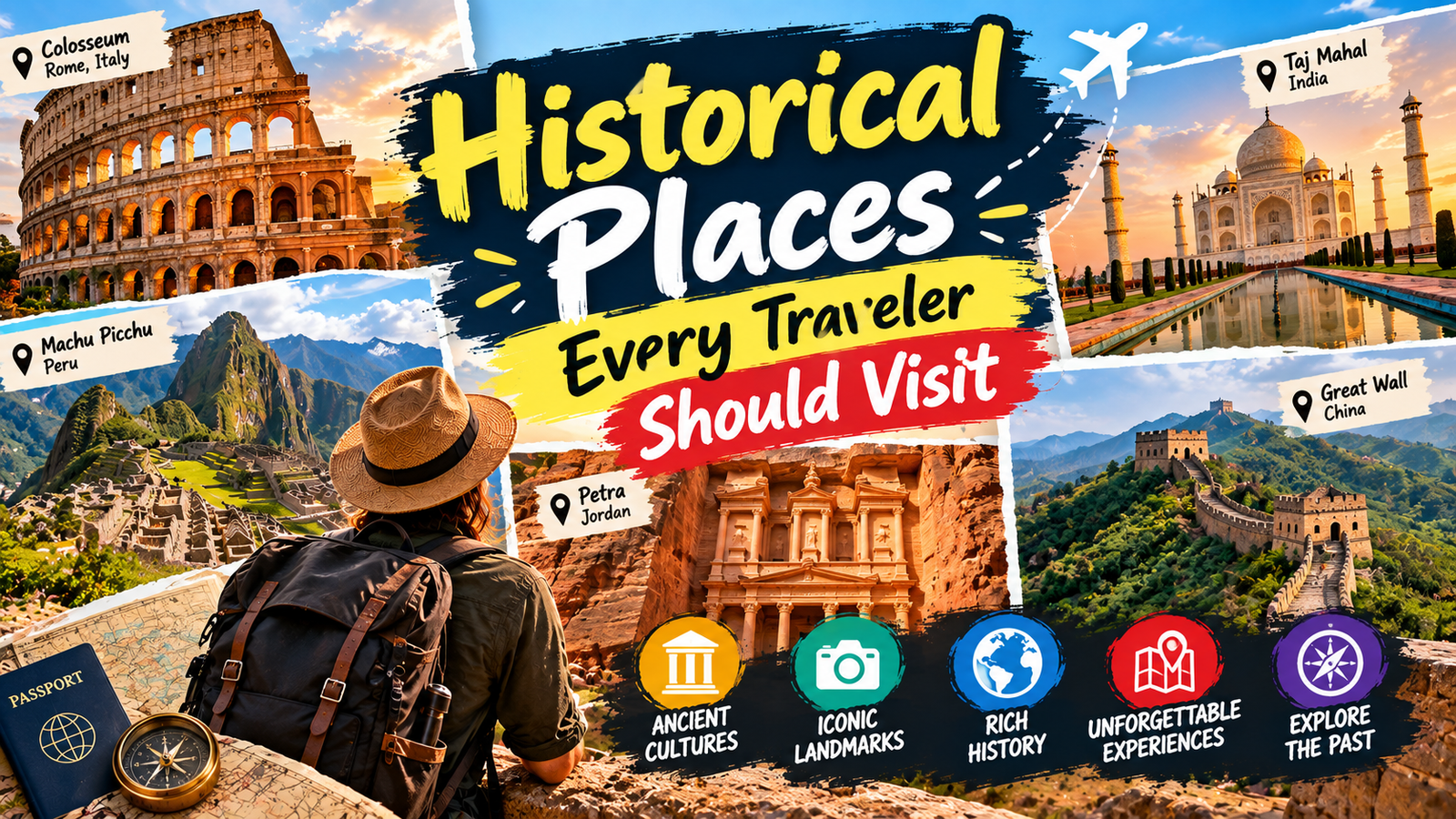
Keyword & Topic Map
Primary Keyword: historical places to visit (exact match, high intent)
Secondary / LSI Keywords:
- historical travel destinations
- ancient landmarks
- heritage tourism
- UNESCO World Heritage sites
- historical sites to visit
- cultural heritage travel
- must-see historical landmarks
- history travel guide
Long-Tail Keywords:
- what are the best historical places to visit in the world
- how do I plan a trip around historical sites
- which historical landmarks are worth visiting
- are historical sites worth the travel time and cost
- how to visit historical places respectfully
User Intent: Primarily informational, with a navigational/transactional undercurrent — readers are researching where to go and, in many cases, planning an actual itinerary or booking a tour.
Recommended H1: Historical Places Every Traveler Should Visit (And How to Actually Plan the Trip)
H2 Structure (with H3 subheadings):
- What Counts as a “Historical Place”? A Deeper Definition
- Heritage Sites vs. Historical Curiosities
- Why Context Matters More Than the Landmark Itself
- Why Visiting Historical Places Matters: The Real Stakes
- What Heritage Tourism Actually Contributes
- What the Data Shows About Over-Tourism at Iconic Sites
- How to Plan a Historical Travel Itinerary: A Step-by-Step Breakdown
- The Depth-Over-Breadth Framework
- Timing Your Visit Around Crowds and Preservation
- Booking Guides, Entry, and Local Context
- Common Mistakes People Make (and How to Avoid Them)
- Treating Historical Sites Like Photo Checklists
- Ignoring Local Preservation Rules
- Expert Tips & Advanced Strategies
- Reading Before You Go
- Pairing Major Sites with Lesser-Known Ones
- Who Should Use This Approach / Who Should Not
Historical Places Every Traveler Should Visit (And How to Actually Plan the Trip)
I remember standing in the ruins of Ephesus in Turkey at 7 a.m., an hour before the tour buses arrived, and having the Library of Celsus almost entirely to myself. Twenty minutes later, the crowds rolled in, and the experience completely changed — not because the site changed, but because the way I was able to engage with it did. That single morning taught me more about visiting historical places well than a decade of casually checking landmarks off a list ever had.
This guide is built around that lesson: the “what” of historical travel matters far less than the “how.”
What Counts as a “Historical Place”? A Deeper Definition
People often use “historical place” loosely to mean anything old. But not every old building carries the same weight, and knowing the difference changes how you plan a trip.
Heritage Sites vs. Historical Curiosities
A UNESCO World Heritage Site — there are currently well over 1,000 inscribed properties worldwide — has been formally recognized for outstanding cultural or historical significance, often backed by conservation protections and international oversight. A “historical curiosity,” by contrast, might be a charming old building with local significance but no formal recognition or protective infrastructure. Both are worth visiting. But they require different expectations: heritage sites usually have better visitor infrastructure and stricter preservation rules, while curiosities often reward travelers willing to do independent research.
Why Context Matters More Than the Landmark Itself
In my experience, the single biggest difference between a forgettable visit and a genuinely powerful one is how much context you bring with you. Standing in front of the Colosseum without knowing anything about it is a nice photo. Standing there understanding what actually happened inside it, and why it was built the way it was, is a completely different experience. Historical travel rewards preparation more than almost any other type of trip.
[Internal Link: “related article about researching a destination’s history before you travel”]
Why Visiting Historical Places Matters: The Real Stakes
This isn’t just about ticking boxes on a bucket list. Heritage tourism has real economic and cultural stakes, both for travelers and for the communities that steward these sites.
What Heritage Tourism Actually Contributes
UNESCO and various national tourism boards have documented that heritage-designated sites frequently drive disproportionate local economic activity relative to their size, since they attract sustained visitor interest year-round rather than seasonal spikes alone. Entrance fees, guide fees, and nearby small businesses often depend heavily on this steady stream of history-focused travelers.
What the Data Shows About Over-Tourism at Iconic Sites
At the same time, some of the world’s most visited historical sites — Machu Picchu, Angkor Wat, and Venice among them — have introduced visitor caps, timed-entry systems, or new fees in recent years specifically to manage preservation risk from overcrowding. Machu Picchu, for instance, has shifted to timed-entry ticketing with capped daily visitor numbers to reduce physical wear on the site. This tells you something important: historical travel done carelessly, at scale, can genuinely damage the very thing people are traveling to see.
How to Plan a Historical Travel Itinerary: A Step-by-Step Breakdown
Here’s the system I use, which I call the Depth-Over-Breadth Framework.
The Depth-Over-Breadth Framework
Instead of trying to see every famous site in a region, I choose two or three anchor sites per trip and build the itinerary around genuinely understanding them — reading beforehand, hiring a knowledgeable local guide, and allowing enough time to actually absorb the place rather than rushing through.
- Pick anchor sites, not a checklist. Two or three deeply experienced sites beat eight rushed ones.
- Allocate real time. A major historical site deserves a minimum of half a day, ideally a full day for major complexes like Angkor Wat or the Roman Forum.
- Build in buffer days. Historical sites often reward a second, calmer visit after the initial “wow” factor wears off.
Timing Your Visit Around Crowds and Preservation
Early morning (right at opening) and late afternoon consistently offer the lowest crowds and the best light for photography, in my experience across a dozen major sites. Shoulder season — a few weeks before or after peak tourist months — also tends to reduce both crowding and price, while still offering reasonable weather at most destinations.
Booking Guides, Entry, and Local Context
- Guides: A knowledgeable local guide, ideally certified through a national tourism board, adds context no plaque or audio guide can match.
- Entry: Many major sites now require timed-entry tickets booked well in advance — check official site pages directly rather than third-party resellers, which often charge inflated fees.
- Context: Reading even a short historical overview before arrival dramatically improves comprehension and retention during the visit itself.
[Internal Link: “related article about hiring reputable local guides abroad”]
Common Mistakes People Make (and How to Avoid Them)
I’ve made most of these myself before learning to slow down.
Treating Historical Sites Like Photo Checklists
The most common mistake: rushing through a major site in 45 minutes to “get the photo” and move to the next stop. This turns a potentially profound experience into a blur. If a site made your itinerary at all, it deserves real time — otherwise, it’s worth reconsidering whether it belongs on the trip.
Ignoring Local Preservation Rules
Many historical sites have specific rules — no touching certain surfaces, no flash photography, restricted zones — that exist because of real, documented damage from previous visitors. Ignoring these rules, even unintentionally, contributes to the same over-tourism pressure that’s led to closures and restrictions at sites worldwide.
Other frequent mistakes:
- Booking a single day for a site complex that realistically needs two (Angkor Wat is a common example)
- Skipping the on-site museum or visitor center, which often provides essential context missing from the ruins themselves
- Not checking seasonal closures — some sites close sections during extreme heat or monsoon season for preservation reasons
- Assuming a guidebook from a decade ago still reflects current entry rules, hours, or ticketing systems
Expert Tips & Advanced Strategies
These go beyond “buy your ticket in advance” — they’re the strategies that separate a good historical trip from a genuinely memorable one.
- Read one solid book or long-form article on the site before you go. Even 30 minutes of background reading transforms how much you notice and understand on-site.
- Visit at opening or closing, never midday. Midday tends to combine the worst light, the worst heat, and the largest crowds at almost every major outdoor historical site.
- Pair a famous site with a lesser-known one nearby. Visiting a quieter, less-visited site in the same region — often within a short drive — gives valuable comparative context and a break from crowds.
- Hire a local guide for at least one major site per trip. In my experience, the value of a genuinely knowledgeable guide, especially at complex sites, is worth far more than the fee.
- Check for combination tickets. Many cities and regions offer multi-site passes that reduce individual entry costs by 20–40% if you’re visiting several sites.
- Respect roped-off and restricted areas without exception. Even where enforcement feels lax, restrictions are almost always tied to documented preservation concerns.
- Travel slowly through a region rather than site-hopping across countries. Staying longer in one historically rich region lets you build real context across multiple related sites, rather than disconnected highlights.
Comparison Table: Approaches to Historical Travel
| Feature | Guided Group Tours | Independent Research-Led Travel | Private Local Guides | Self-Guided Audio Tours |
|---|---|---|---|---|
| Best For | First-time visitors wanting structure | Experienced travelers who enjoy preparation | Travelers wanting depth and flexibility | Budget travelers wanting some context |
| Depth of Context | Medium | High (if well-prepared) | Very High | Low–Medium |
| Flexibility | Low | High | High | High |
| Crowd Avoidance | Low (fixed group schedules) | Medium–High | High (custom timing) | Medium |
| Price/Difficulty | $$ / Easy | Free–$ / Medium effort | $$$ / Easy once booked | $ / Easy |
| Ideal Trip Style | Short trips, first exposure | Longer, research-driven trips | Special-occasion or focused visits | Casual, flexible sightseeing |
Real Results & Case Studies
On a three-week trip through Cambodia and Vietnam in 2023, I applied the Depth-Over-Breadth Framework deliberately, choosing Angkor Wat and the Cu Chi Tunnels as anchor sites rather than trying to cover every landmark in both countries. I allocated two full days to the Angkor complex instead of the standard one-day pass, hired a local guide certified through the Cambodian tourism authority, and read a concise historical overview beforehand.
The difference was significant. Where a single rushed day at Angkor typically covers three or four temples superficially, the two-day approach allowed for a genuinely detailed exploration of Angkor Wat, Ta Prohm, and Bayon, plus enough downtime to actually process what I was seeing. Compared to a similar trip I took years earlier — six countries in three weeks, historical sites included almost as an afterthought — I retained dramatically more of what I learned, and the photos, honestly, were better too, since I wasn’t rushing.
Who Should Use This Approach / Who Should Not
This kind of historically-focused travel works well for:
- Travelers who enjoy reading and preparing before a trip
- Anyone willing to trade site quantity for depth of experience
- People planning longer trips (10+ days) who can afford to slow down
- Travelers interested in guided context, not just visual sightseeing
It’s a weaker fit for:
- Very short trips (long weekends) where deep preparation and slow pacing aren’t practical
- Travelers who primarily want photo-driven, highlight-reel experiences
- Anyone unwilling to book guides or timed entries in advance, since many major sites now require this
Being honest about your travel style will help you choose which approach actually fits your next trip, rather than defaulting to whatever’s most popular online.
Conclusion
The best historical trips aren’t defined by how many landmarks you check off — they’re defined by how much you actually understood and experienced at the places you chose to visit. Pick fewer anchor sites and go deeper. Time your visits around crowds and preservation windows, not just your flight schedule. Read a little before you go, and hire a local guide at least once per trip. The context is what turns a photo into a memory that actually sticks.
I’ve applied this approach across dozens of historical destinations now, and it consistently produces trips I remember in real detail years later, rather than a blur of landmarks. Pick one historical site on your list, apply the Depth-Over-Breadth Framework to it, and see how differently the trip unfolds. If you want a deeper breakdown of planning a specific region’s historical itinerary, drop a comment and I’ll point you toward the next step.
FAQ Section
1. What are considered the most important historical places to visit? Sites like the Colosseum in Rome, Machu Picchu in Peru, Angkor Wat in Cambodia, the Pyramids of Giza in Egypt, and the Acropolis in Athens are frequently cited among the world’s most significant historical landmarks, largely due to their age, scale, and cultural influence. That said, “most important” is subjective — a lesser-known regional site can be just as meaningful with the right context.
2. How much time should I spend at a major historical site? In my experience, a minimum of half a day is needed for most major sites, and a full day is better for large complexes like Angkor Wat or the Roman Forum. Rushing through in under two hours usually means missing most of the context that makes the site worth visiting in the first place.
3. Are UNESCO World Heritage Sites worth prioritizing over other historical places? Generally, yes, though not exclusively. UNESCO designation typically means stronger preservation infrastructure, better visitor facilities, and formal international recognition of significance. But some of the most memorable historical experiences I’ve had were at smaller, non-designated sites with far fewer crowds and just as much local significance.
4. How do I avoid crowds at popular historical sites? Visit right at opening or in the final hour before closing, and travel during shoulder season rather than peak months. Booking timed-entry tickets as early as possible also helps, since many popular sites now cap daily visitor numbers specifically to manage crowding.
5. Is it better to hire a guide or explore historical sites independently? It depends on the site’s complexity. For large, historically dense sites like Angkor Wat or the Pyramids, a knowledgeable guide adds context that’s genuinely hard to replicate through independent reading alone. For smaller or well-documented sites, independent research beforehand can work just as well, and it’s certainly more flexible.
6. How can I make sure I’m visiting historical sites respectfully? Follow posted rules strictly, even when enforcement seems lax — restrictions almost always exist because of documented preservation issues. Avoid touching ancient surfaces, stay on marked paths, and be mindful of photography restrictions, which some sites enforce to reduce flash damage to sensitive materials.
7. What’s the best time of year to visit major historical landmarks? Shoulder season — generally a few weeks before or after a destination’s peak tourist months — tends to offer a strong balance of manageable crowds, reasonable weather, and lower prices. Exact timing varies significantly by region, so it’s worth checking destination-specific seasonal patterns.
8. Do historical sites require advance ticket booking? Increasingly, yes. Sites like Machu Picchu, the Vatican Museums, and Angkor Wat now use timed-entry systems with capped daily visitor numbers, largely for preservation reasons. Booking directly through official sites well in advance is strongly recommended, since walk-up availability is often limited or unavailable during peak periods.
9. Are historical travel trips more expensive than typical vacations? Not necessarily. Entry fees, guide costs, and combination passes add some expense, but historical travel doesn’t require luxury accommodations or high-end dining to be worthwhile. In my experience, the biggest cost driver is usually transport to reach these sites, not the sites themselves.
10. How do I plan a multi-country trip focused on historical sites without over-scheduling? Choose fewer countries and allocate more days per region rather than trying to cover as much ground as possible. Applying a “two or three anchor sites per trip” approach, with buffer days built in, consistently produces a more satisfying and less exhausting itinerary than a packed, highlight-only schedule.
Meta Description
Explore the world’s most meaningful historical places to visit, with a proven framework for planning trips that go deeper than a typical checklist.